Welcome to the Verbault Blog
Hello from the Verbault Team
Welcome to the official Verbault blog. Whether you are a student working through classic literature, a teacher building vocabulary materials, or simply a curious reader who loves words, this is the right place for you.
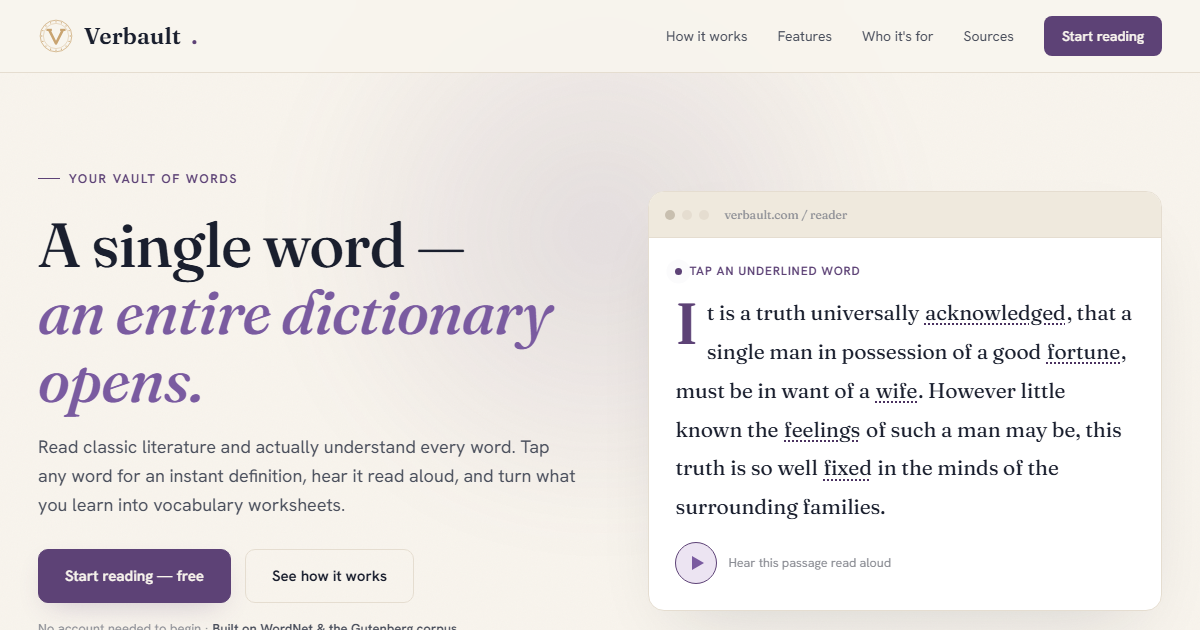
Verbault began with a simple conviction: the best way to grow a vocabulary is to read real, rich texts — and to have the right help exactly when a word stops you. This blog is where we explain how the platform does that, share what we are building next, and pass on what we learn about reading and language along the way.
What You Will Find Here
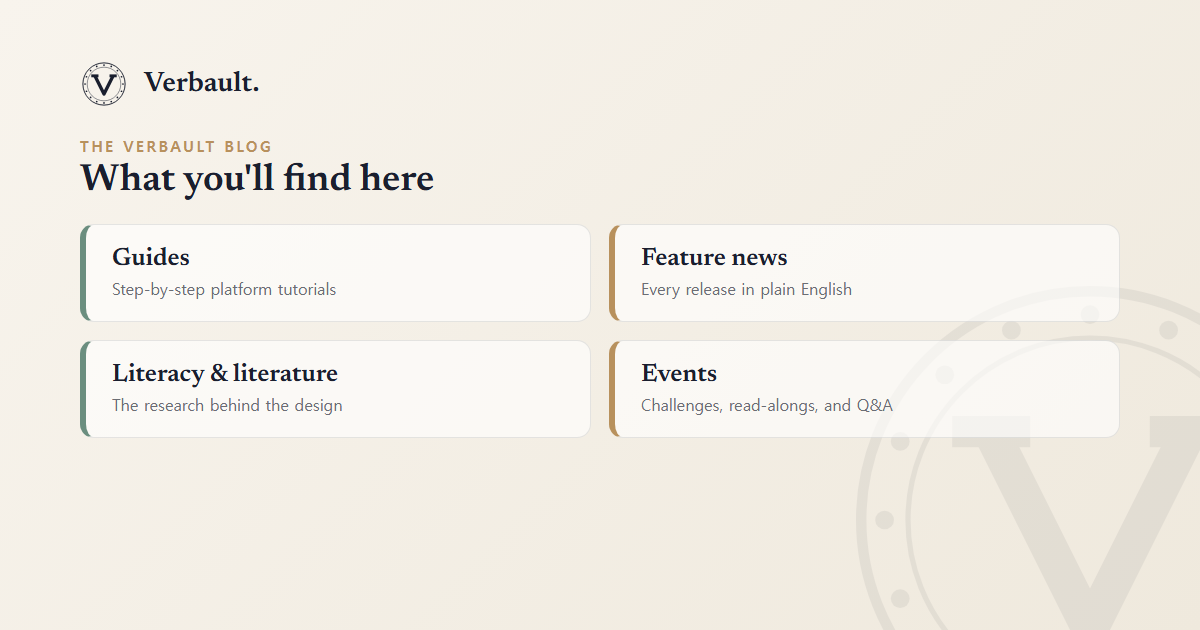
We write about four things, and most posts fall neatly into one of them:
- Guides — step-by-step tutorials for every part of the platform, from the Reader to printable worksheets. If you want to do something with Verbault, start here.
- Feature announcements — every new release explained in plain English, with the reasoning behind it and how to try it the same day it ships.
- Literacy & literature — deeper dives into the texts in our library and how language-learning research supports our design choices.
- Events — community challenges, reading marathons, and live Q&A sessions.
Every post is filed under a category and tagged, so you can follow just the threads you care about — jump to the guides category for tutorials, or browse everything in reverse-chronological order.
Get Started Right Now
The fastest way to understand Verbault is to open a book you already love. Try Pride and Prejudice or Frankenstein — both are in the public domain and instantly available in the Reader with inline definitions, text-to-speech, and one-click worksheet generation. Tap a word you do not know, hear the sentence read aloud, save the word to your Vault, and you have already used four of Verbault's core features in under a minute.
If you are not sure where to begin, the Reader guide walks through a text from a blank page to a finished worksheet, and what is Verbault? gives the full tour.
We are glad you are here. Onwards and upwards — one word at a time.
Comments (0)
Log in to comment.