Buzz, Hiss, Clang: The Words That Sound Like What They Mean
The word that makes its own noise
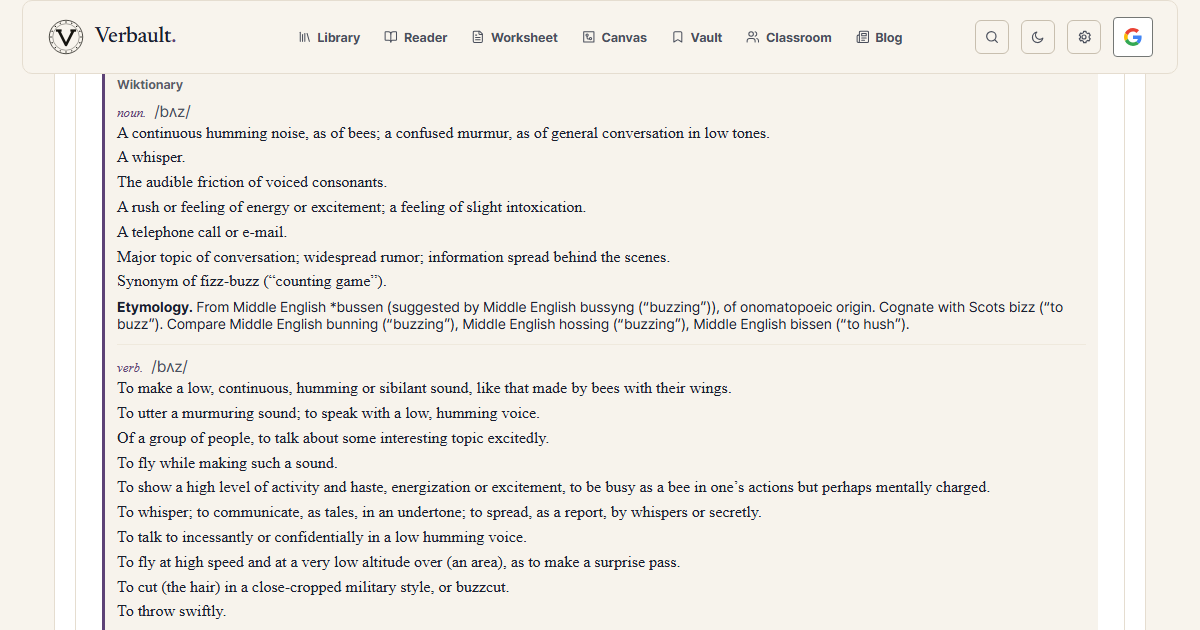
Say buzz aloud and you have very nearly made the sound a bee makes. That is not a metaphor, and it is not quite a coincidence — the word was built out of the noise. Verbault's word page for buzz records it without ceremony: the entry is "of onomatopoeic origin," coined to imitate the thing it names.
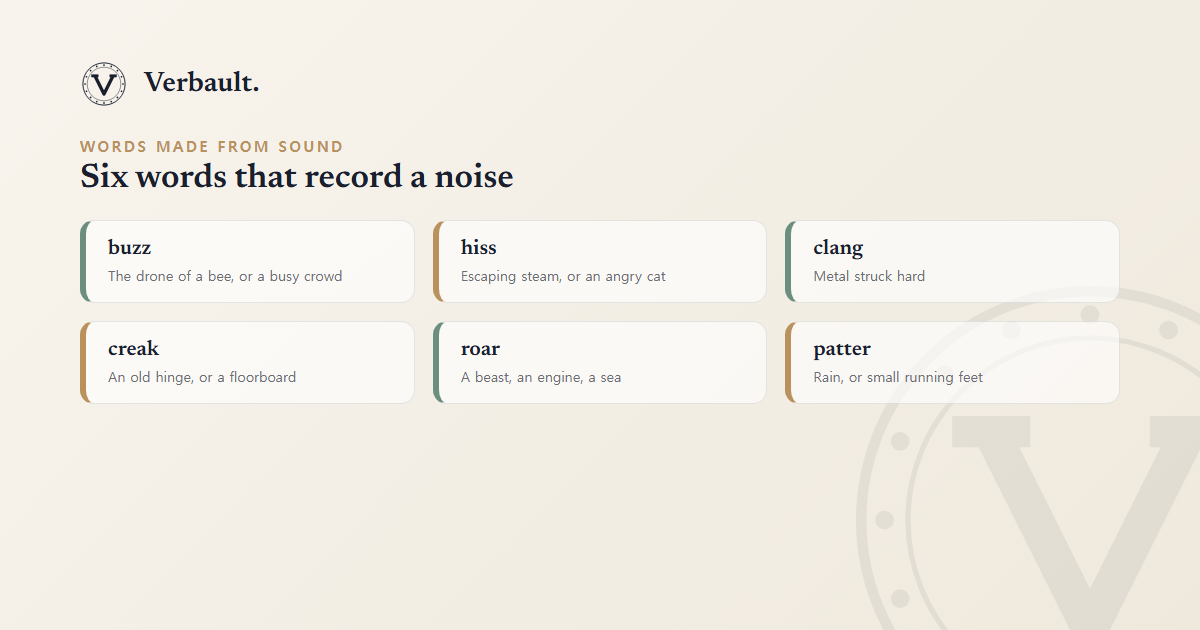
The name for this is onomatopoeia — a word that copies a sound. English keeps a whole drawer of them, and most are so ordinary you have never noticed that the word and the noise are the same gesture. Hiss, clang, creak, splash: each one is a small recording, made with the mouth, of something the world does.
You can hear where these came from
The pleasant surprise is that the dictionary tends to agree with your ear. Open the word pages for the obvious candidates and the etymologies say so out loud. Clang is "of imitative origin," dated to the 1570s. Creak is, in the page's words, "ultimately of imitative origin." Hiss is "probably of onomatopoeic origin"; roar, more cautiously, "perhaps" — the dictionary hedges where the trail goes cold, which is its own kind of honesty. Patter, the soft quick noise of rain or small feet, is onomatopoeic at root, built on an ending that means again and again.
What you are seeing on those pages is not a label someone slapped on. It is the recorded judgement of people who traced the word back as far as it goes and found, at the bottom, an attempt to write a sound down. The reading-level badge and the list of meanings are there for every word; for these, the etymology line is the part worth reading.
What the classics do with them
A sound-word earns its keep in a sentence, where it drops a noise into a scene the way a sound effect drops into a film. The classics are full of them, doing quiet work.
Mark Twain ends the restless hum of a schoolroom in five words: "The buzz of study ceased." You hear the room go quiet because you first heard it busy. Eugene O'Neill stages a whole prison with one noise — "An iron door clangs shut" — and the metal is right there in the verb. Conan Doyle lets you know someone has entered before Holmes looks up: "There was the gentle rustle of a woman's dress." And patter does double duty for rain and small feet, because the two sounds really are cousins — "a light patter of feet" in E. Nesbit, and "a quiet patter" as a storm fades in Ben Hecht.
None of these writers stopped to explain the noise. They didn't have to. The word carries the sound, the sentence carries the scene, and the reader hears both at once.
Not every sound-word was born from sound
Here is the honest complication, and it is the interesting part. A word can sound exactly right and still have arrived some other way. Murmur feels invented on the spot for the low run of a voice or a stream — but the page traces it to Latin murmur, a word the Romans already had. Splash looks like pure invention, yet it is "probably an alteration of plash," an older word handed a heavier opening sound. And rustle, for all its dry leaves, is filed under "of uncertain origin" — the honest verdict when the evidence runs out.
This is why the etymology line is worth a glance rather than a guess. The ear is a good detective and a poor judge: it can tell you a word sounds like its meaning, but only the record can tell you whether it was made that way. Often the two agree. Sometimes — murmur, splash — the resemblance is real and the parentage is something else entirely.
Reading for the sound
Onomatopoeia is the rare corner of vocabulary you can enjoy without studying it. The words are easy; the pleasure is in catching them at work.
- Check the etymology when a word seems to ring. Open its page — clang, buzz, any candidate — and read the origin line. If it says imitative or onomatopoeic, your ear was right; if it sends you to Latin or to "uncertain," you have learned something better than a guess.
- Read with the words live, and listen. Open any book in the Reader and tap a word for its meaning and reading level. Play it aloud, too — a word that was built from a sound is worth actually hearing, not just seeing.
- Keep the ones that ring true. Save a good sound-word to your vocabulary list. They are among the easiest words to remember, because the meaning is hiding in the noise.
We once wrote about the opposite case — letters that fell silent and stayed on as ghosts in the spelling, in why English is full of silent letters. Onomatopoeia is the cheerful reverse: not a sound that died inside a word, but a sound that became one, and can still be heard the moment you say it aloud.
Comments (0)
Log in to comment.